Saturday, May 26, 2012

Black To The Future

Much like in the United States black cattle reign supreme in the Australian marketplace. For the past two days we've had the opportunity to speak with some seedstock producers in Australia who raise Black Simmentals and Angus cattle.


The group at Webb Black Simmental.
The first breeder we met was Webb Black Simmental on Friday. They are located just north of Melbourne and market around 50 head of bulls each year. The Webb operation started six years ago when Phillip Webb decided to get into the cattle business after working as a realtor in Melbourne. He had been raised on a family farm, so this was a bit of a coming home for him.

In Australia the Black Simmental breed has not been widely accepted, which has left an opportunity for expansion into this growing market. Because of the success of the Angus breed at the supermarket producers have shifted to breeding black hided cattle. However, there is limited selection in Australia for cattle that will perform well on grass and in the feedlot that are black hided other than Angus cattle.
This old Simmental was a little cold and wet.

Webb's objective is to market the Black Simmental breed to producers who are using primarily Angus genetics, but they would like to get into some northern Australian herds composed of Bos. indicus cattle as well. This will help those commercial producers capitalize on hybrid heterosis, giving the cattle the increase in carcass yield while not sacrificing quality or hide color.


On Saturday we visited Lawson Angus which is just south of Seymour and also just up the road from Webb Black Simmental.

Lawson Angus offered a unique perspective for the K-Staters because much of the genetics that have been utilized in their program date back to the Gardiner Angus Ranch in Ashland, Kansas. It also didn't hurt that one of our group members is Grant Gardiner. The visit allowed Grant and Harry Lawson, managing director, the opportunity to meet and catch up each other up on their operations.

A good looking Angus yearling bull.
This past year the Lawson family hosted their 42nd Annual Production Sale, where 200 bulls and 130 females were marketed. The family has over 2,000 head of Angus cows on various stations across the country, including Western Australia where Lawson Angus has just started breeding cattle in the past few years.

Cattle from Lawson Angus are marketed all over Australia and even in Russia. They also hope to get more cattle marketed to Australian cattle producers in the north, similarly to what the Gardiner Angus Ranch has done with the Southern Cattle Improvement Project in the United States.
                
Something similar about both Lawson Angus and Webb Black Simmental is the use of American genetics to help improve their herds. Both producers also use Expected Progeny Differences and Expected Breed Values to determine genetic merit.

Posing for another group picture at Lawson Angus.
Well, now that we've seen what the black cattle of Australia have to offer it is time for our group to see some red hide. Over the next few days we'll visit a Shorthorn seedstock producer and a commercial Hereford operation.

Until next time, happy trails!

Friday, May 25, 2012

Rinse. Lather. Repeat: Australian Meat


Day three on the Australian adventure brought with it a spell of rainstorms and learning about meat packing.

Both sheep and cattle are processed here.
We checked out of the hotel in Melbourne and made our way to the Brooklyn Abattoir, which is owned by JBS. The facility kills and processes 5,000 head of sheep and 875 head of cattle daily. JBS is the largest meat processor in Australia and the Brooklyn Abattoir is a major packing facility in the southern hemisphere.

On our tour we were able to watch all facets of the slaughter and packing process for both species of ruminants. We moved from multiple buildings and rooms throughout the facility. At each entrance and exit we had to wash/disinfect our boots and hands. This was a very important step in preventing the spread of contaminants at the abattoir.

(Warning: some slaughter practices will be explained, so if you are leery of blood and guts skip down a few paragraphs.)

Some of the K-Staters after the tour.
Something that I found interesting was the "knock box" which is used for stunning cattle and bleeding them out. The knock box is a hydraulically operated machine that restrains cattle to be stunned. After being stunned the cattle are flipped 180 degrees, upside down and the throat is cut to help bleed them out. To me it seemed like an efficient and safe process to slaughter cattle, and it offers a humane death for the animals that go through the facility.  

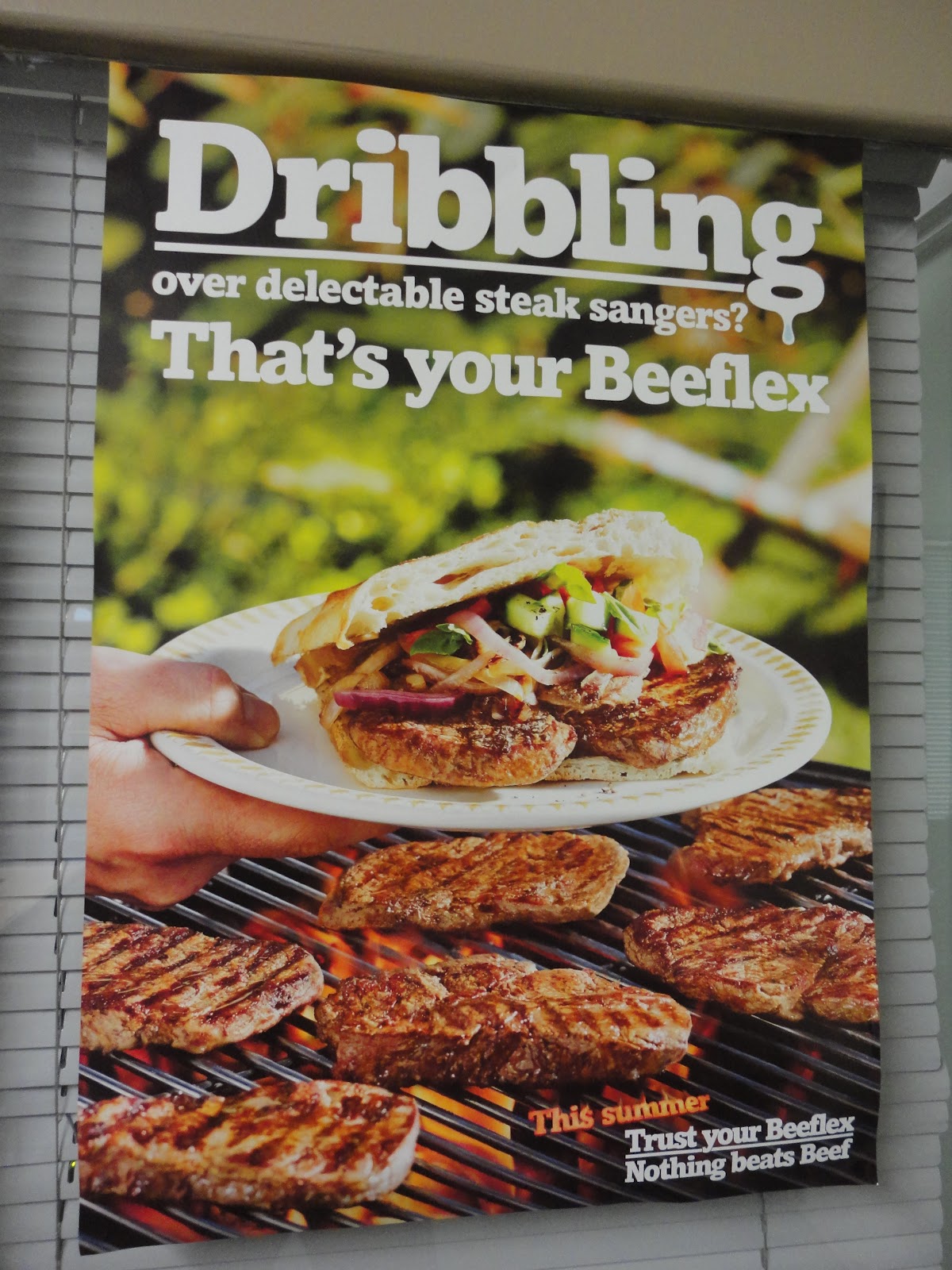
Marketing materials for JBS beef.
The sheep kill floor was also pretty neat to see, as this is an industry that is not as prevalent in the United States. In all it takes between 15 to 20 minutes for each sheep to go from stunning to the chill room.

Both lamb and beef carcasses are chilled for 24 hours, typically at 0 degrees Celsius before they are cut into primals like steaks and chops. After being sliced and diced into various cuts of meat everything is vacuum packed, boxed and ready to ship. It generally takes 3 to 5 days for the finished product to reach supermarkets in Australia. However, the exported product typically takes 4.5 weeks to reach its destination, which takes up more than half of the 8 week shelf life.

Marketing value added products from the Brooklyn Abattoir is something that was new to the plant just two days before our visit. Some former beef chill and boning rooms were retrofitted to handle a value added processing line that was brought in from a Tasmanian JBS plant. The value added line automatically cuts various types of meats into more consumer friendly products. During the value added process there are various labels and ingredients included with the product to help catch the consumers attention and simplify cooking.
The largest packing company in Australia is JBS.

In all it was interesting to see the similarities between the US and Australian meat packing industries, but there were some differences because of cultural taste and international marketing. Now we can look forward to our next abattoir tour in Wagga Wagga with Cargill where they specialize strictly in beef processing.

Until we meet again, happy trails!

Melbourne Maze

If there was one television show to describe our second day in Melbourne it would be Lost.

This photo put me a little behind the group
On multiple occasions I was left behind either because I was being slow, taking too many pictures, asking too many questions or waiting on others in the group to catch up. Luckily I was able to catch back up with our mob of people every time, but I did get a bit nervous on a few occasions.

The first time I got separated from the group was during some photo opportunities while we were in route to the Department of Primary Industries (DPI).

At the first stop we met with the DPI of the State of Victoria where there were representatives from the livestock industry, including the National Livestock Identification System (NLIS). Tony Britt, Director of Animal Biosecurity and Welfare, was our many presenter and he gave an overview of NLIS.
Some of the swag I scored at DPI.

We learned from Tony that identification of all sheep and cattle is federally required to help detect and prevent the spread of disease outbreaks, such as foot and mouth.

Our first group picture.
Next the group rode around on a bus tour making stops at various gardens and architectural wonders of Melbourne. I managed not to get left behind during this part of the day.


To end our day of touring we ventured to the Carlton United Brewery, home of Australian beer mainstay Foster's. We learned about the brewing process and even got to do a little taste testing. However, before I could taste any grog I had to wait with five other K-Staters because we had been locked in the bottling side of the factory.

Some darn good grog.
After waiting five minutes we were rescued by a Canadian import who was nice enough to offer the whole tour group a round of beer. Then I spent a little bit of my Australian currency on a Foster's t-shirt and a cooler full of six different types of beers to taste test throughout the trip.

The final time I was lost in the labyrinth of Melbourne happened on the way to a casino buffet. My fellow wildcats had traveled all over the downtown area of Melbourne in search of a restaurant that could seat us. In the process we had lost our tour guide Graeme Mitchell and Michael Wimer. They were both engaged in a conversation about the American and Australian beef industries. I realized this so I hung back to help direct them to the Crown Casino, but little did I know that the casino would be a maze of confusion.
Blogging ain't easy, but somebody has got to do it.

A half-hour after journeying through the casino we finally were reunited with the group and I was able to dine on various types of cuisine to quince my hunger.

Well, our stay in Melbourne is over. Now it's time to see some wide open space between Melbourne and Sydney. Maybe we'll get a little gravel in our travel too.

Until next time, happy trails!

Wednesday, May 23, 2012

The Law Won & Melbourne Fun

I fought the law and the law won, well I guess you can say I fought the law. Apparently, the Australian Customs and Border Patrol does not appreciate foreigners bringing in certain items to their country. My nearly finable offense was bringing some beef jerky to Australia.

Getting a little McDonald's while in Australia.
It is understandable to not allow fruits, vegetables, wood products, or even live animals because of the threat of disease. For this same reason I was asked to throw out my beef jerky that I had brought with me to snack on during my travels. I complied with the customs officer who processed me at the airport, but I did question why I could not bring beef jerky.

He told me it was because of the threat of foot and mouth disease. I then asked again to make sure because foot and mouth has not occurred in the United States since 1929.

The officer then told me it was because of a problem with the US beef herd that had happened a month ago. I then corrected the officer by stating that it was a case of Bovine Spongiform Encephalopathy (BSE) in California that did not even enter the food supply.


Also, during the questioning process I was asked if I had been on a farm in the past 30 days. I stated that I had been on a ranch and that I fully understood why they were taking the action that was required.


The great looking views on the outskirts of Melbourne.
Finally, I was on my way out of customs and making strides towards my tour group. Once reunited with my fellow K-Staters we were off to the Healsville Sanctuary, a zoo and refuge for Australian wildlife. 


Before reaching our destination we did have to make a pit stop at an American icon: McDonald's. Many members of the group dined on some breakfast food and beverages before our bus drive to the wildlife park.

After the stop at McDonald's we drove through the city of Melbourne and several suburbs before we reached the countryside. A much needed break from the hustle and bustle of airports and metropolitan areas. 


Engaging in a staring contest with a bird. I think I was the victor.
We saw many interesting sites like a strawberry and cabbage growing operations, a lot of vineyards, cattle and sheep in co-grazing systems, and the beauty of the Australian countryside.


Upon reaching the Healsville Sanctuary we broke into two groups where we were guided by several insightful people at the park.


Highlights of the park stop included seeing native wildlife to Australia (bilbies and kangaroos), taking a ton of pictures, feeding and holding parrots, and playing didgeridoos.


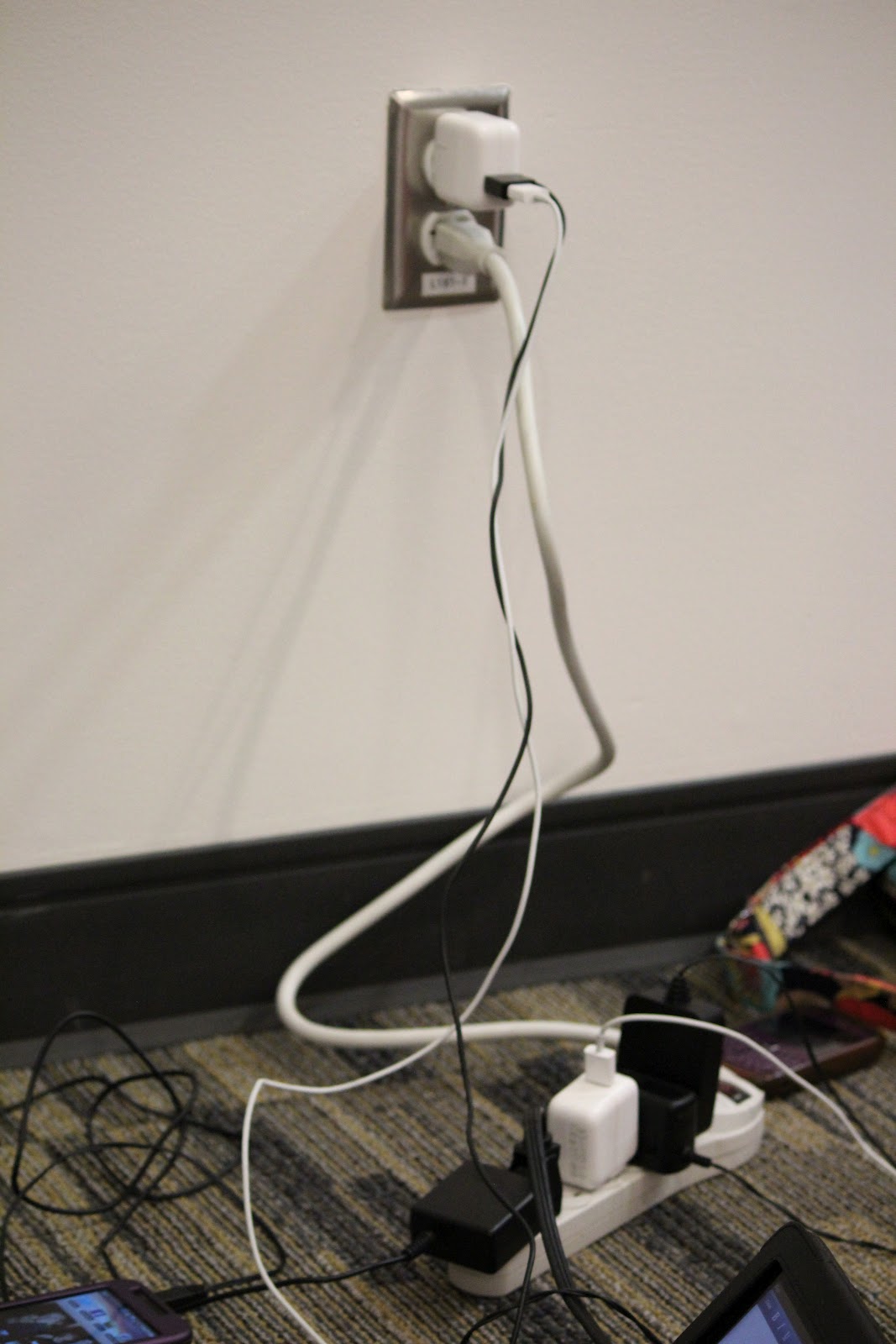
No more charger parties for my power strip.
We did finally have to leave all the excitement at the wildlife park so we could check into our hotel rooms. Then some more excitement occurred for my roommate, Grant Gardiner, and I, when the electricity in our room suddenly went out.


Between a combination of my converter and power strip not liking the new power outlets in Australia, we were without power for a half hour. I thought I might have ruined the wall sockets, but luckily the manager at the hotel just needed to flip a breaker and we were back in business.


Needless to say my power strip will likely not be involved in anymore "charger parties" at airports or other fun stops along the way, because I'm pretty sure it was toasted.


I got a little gelato for desert at La Camera.
To end the night the entire group went out to dinner at a nearby Italian restaurant called La Camera. Which I thought was quite coincidental because we had all been taking a lot of pictures at the Healsville Sanctuary and there are only more to come.


Well until next time, happy trails!