Showing posts with label Beef. Show all posts

Thursday, June 7, 2012

ID US...Please

Here is some of the propaganda I took to learn about NLIS.
The National Livestock Identification System (NLIS) was one of the most interesting aspects of the trip for me. 

NLIS doesn't just help prevent the spread of disease, but it also helps increase the bottom line for producers. Having electronic identification tags like Australia uses in the beef industry enables breeders to obtain performance and carcass data much easier than in the United States. Because Australia is so dependent on exporting beef NLIS was a must and with the United States' beef industry moving more towards export it will only be a matter of time before a similar system will be adopted nationally. 

The owner of Lima Park showing an electronic ID tag.
In talking with producers it was obvious that NLIS was a major success in their marketing plans and herd improvement. For instance, at Lima Park they are now able to sell cattle to the European Union because the animals can easily be age and source verified. Also, monitoring when cattle are ran through the chute can be done thanks to the technology used to scan the electronic tags.

A digital tag reader at Lima Park.
After experiencing electronic identification in person I can now see the benefits it brings with it. In order for the United States to be on a level playing field with Australia and many other livestock producing nations, the USDA will have to continue the National Animal Identification System that was implemented in 2004.

Until we meet again, happy trails!


Wednesday, June 6, 2012

Australia In My Rearview

Wish I could have spent more time in Sydney.
The time has come for me to reflect on my visit to Australia.

From our tourist stops in Cairns and Sydney to the agriculture visits along the Great Dividing Range, our group of K-Staters got a great taste of Australia.

However, I found myself wanting more. More time to explore the world class city of Sydney. More time to visit Ayers Rock in the center of the country. More time to see a massive cattle station in Southern Australia. More time to see a live export ship near the port in Perth. But time and money are both in short supply for college students, so I'll just have to go back when I strike it rich (knock on wood).

It was great to learn about the different genetics in Australia.
This trip allowed me to better myself as an agricultural journalist. The daily blogs forced me to think about what I had just learned, but also what would be important to my readers back home. I asked as many questions as possible to aid in the process of understanding the differences in the agriculture systems in Australia and the United States. It also didn't hurt that I took thousands of pictures and recorded video on our trek across the eastern side of Australia.

I already miss being in Australia with my fellow Wildcats.
It was a great time on our trip getting to know my fellow Wildcats better, while also learning about a country, continent and island I've always dreamed of visiting. Now I can say "mission accomplished" and hope that someday I'll be back.

Until next time, happy trails!

Saturday, June 2, 2012

There Was A Boy From Australia: The Auctioneer

Livestock auctions in Australia is a little different than what we are used to in the United States. Here is some video I took during the weekly cattle sale at the Wagga Wagga Livestock Marketing Centre on Monday, May 28.


I shot another video just to get some extra footage of this interesting process. In talking with our guide it was my understanding that the auction works more like a game of poker, with each buyer having their own tell. Rather than blatantly throwing their arms up to catch a bid, the buyers instead try to be inconspicuous.  


The auctioneer also has a much different "yell" than we are used to in the United States. I don't think Leroy Van Dyke was singing about this auctioneer when he sang the following song:


Until we meet again, happy trails!

Thursday, May 31, 2012

K-State Connection


CSU is located on outside Wagga Wagga and many students live on campus.
Australia may not be home to any cats in the wild, but there certainly is a fair share of Wildcats here.

During our past day or so in Wagga Wagga we had the opportunity to meet two faculty members at Charles Strut University (CSU) who have direct ties to Kansas State University.

On Monday night Dr. Peter J. Chenoweth joined us for dinner at the Victoria Hotel, a restaurant and pub in Wagga Wagga. Dr. Chenoweth is a former K-State faculty member and still maintains contact with members of the reproductive physiology staff back in the United States.

After most of the group grabbed some steaks, we finished enjoying the night by joining some CSU animal science students at a local brewery, The Thirsty Crow.

It was a great time getting to know the CSU students and compare our educational systems, while also learning about one another's backgrounds.

The next morning we toured CSU with Dr. Chenoweth serving as our guide. He took us around campus on a bus ride and then we made our way to the College of Agriculture's farms. We stopped at various units on the farm including the beef and sheep facilities.

This dog certainly put on  a performance for the K-Staters.
At the sheep unit the group got to witness our first display of a cattle dog working in Australia. The Kelpie we watched was just two years old, but she sure knew how to muster a mob of sheep.

Kelpies are a type of working dog that was bred in Australia specifically to gather sheep.

The beef unit allowed the Wildcats to see some excellent handling facilities that Dr. Chenoweth had designed utilizing Temple Grandin style methods.
When we arrived at the unit a group of vet students was mustering a mob of cows and calves to the working barn. All of the cows received a cesarean to aid in the learning of the vet students at CSU and they were being brought in for a routine checkup.

Besides looking at the units on campus we also had the chance to tour their state of the art College of Veterinary Medicine buildings. Some of the highlights of the vet med area was seeing reproductive stations used for artificial insemination of horses and new technology for animal x-rays.

Former K-Staters talking to us about CSU.
We me another K-Stater Down Under, Dr. Tonya Collop, the resident reproductive specialist at CSU. She received her doctorate of veterinary medicine at Kansas State, so it was good for the group to see an alumni in the area.

It's great to see fellow Wildcats doing so well across the world, and maybe some of our group members will want to come back down to Australia someday.

Until we meet again, happy trails!

Monday, May 28, 2012

The Stockyard In the Australian Backyard

Today's itinerary for our K-State tour included a stop at a sale yard, a packing plant and a feedlot.

Some Hereford cattle being sold at Wagga Wagga.
First we visited the Wagga Wagga Livestock Marketing Centre, which is one of the largest cattle and sheep marketing outlets in Australia. The sale barn was started in 1979 and is operated by the Wagga Wagga City Council. Producers come from over 800 km to market their animals, and they come from both New South Wales and Victoria.

Cattle are sold on Mondays each week, while sheep are sold on Thursdays. Around 2,800 cattle were being sold when we toured the facility with an average of 500 cattle going through the ring each hour. The sheep sale is an even larger affair with over 30,000 head marketed each week.

While at the stockyard we were able to see our first display of working horses. In Australia the typical horse used for everyday cattle work is the Australian Stock Horse. It is similar to the Quarter Horse in working ability, but slightly larger in size.

Australian Stock Horses doing their thing at the saleyard.
The Australian Stock Horse is used for a rodeo event similar to cutting and team penning, it is called camp drafting. Cattle are put into a mob of 10 in a pen, then a calf must be cut out of the group and moved through an obstacle course in the open.

After the stop at the sale yard we went across the road to the Cargill-Teys packing plant. The facility slaughters and processes 1,200 head of cattle each day with a 50-50 split on grass finished and grain fed beef.

Around 35 percent of the product coming from the Wagga Wagga processor stays in Australia, with the remaining 65 being exported to Asian, European, and North American countries.

This is the sign that greeted us at the plant.
The Cargill-Teys plant was very similar to what you would see in the United States. Grading was performed by a computer camera system which could be overridden by the grader operating it. Also, the line for processing and packing the beef was much faster than what we had previously seen at JBS.

To help put a vertical integrated spin on our trip we toured the Jindalee Feedlot, which is owned by Cargill-Teys. The feedlot has a 17,000 head capacity and all of the animals are processed at the Wagga Wagga Cargill-Teys packing plant.

At the Jindalee Feedlot they have a turnover rate of about 3.75, meaning they feed over 60,000 head of cattle each year.

It was surprising to see how similarly the feedlot was managed when compared to the United States' cattle feeding industry. Implants were used throughout the feedlot and over 95 percent of the cattle were bought directly from cattle producers.

The feedlot that sends a primary share of beef to the Wagga Wagga processor
Death loss at the feedlot was low at only a percent. The morbidity rate for cattle was around 20 percent, with treatment of cattle being commonly caused by respiratory problems.

In all this was a day where we could see the most similarities to the American beef industry, but we still found enough differences that make Australia unique.

Well until next time, happy trails!

Sunday, May 27, 2012

Breeding Better Livestock


The theme for the past few days has been breeding better livestock, and the Australian producers we've met have been achieving this goal.

I've been on blog writing overload so I think I'll just let the pictures with some captions do the talking for me about the past day or so of tours.

Enjoy, and good on ya, mate!

Very fine Merino sheep wool from Trigger Vale.

The bottle baby at Trigger Vale.

A type of sheep race way (or alley way) in Australia.

The Rock.

This emu is strutting it's stuff for us.

The group after our dinner at the emu farm.

Darn good looking bull at Sprys Shorthorns.

Judging cattle never ends for Dr. Schaake. This yearling bull sold for $46,000 in Australia.
The group posing for a photo with the folks at Sprys Shorthorns.

Best steaks we've had thus far. Thanks for dinner Sprys Shorthorns.
Temple Running ain't easy, but somebody has got to do it.

Funny realty sign we saw on the drive to Albury.

Multi-species grazing at the commercial operation we visited: cattle, sheep and wild rabbits.

The group talking with our host about sheep and cattle production.

And the sun sets on another great day in Australia.

Thanks for taking a look. Until we meet again, happy trails!

Saturday, May 26, 2012

Black To The Future

Much like in the United States black cattle reign supreme in the Australian marketplace. For the past two days we've had the opportunity to speak with some seedstock producers in Australia who raise Black Simmentals and Angus cattle.


The group at Webb Black Simmental.
The first breeder we met was Webb Black Simmental on Friday. They are located just north of Melbourne and market around 50 head of bulls each year. The Webb operation started six years ago when Phillip Webb decided to get into the cattle business after working as a realtor in Melbourne. He had been raised on a family farm, so this was a bit of a coming home for him.

In Australia the Black Simmental breed has not been widely accepted, which has left an opportunity for expansion into this growing market. Because of the success of the Angus breed at the supermarket producers have shifted to breeding black hided cattle. However, there is limited selection in Australia for cattle that will perform well on grass and in the feedlot that are black hided other than Angus cattle.
This old Simmental was a little cold and wet.

Webb's objective is to market the Black Simmental breed to producers who are using primarily Angus genetics, but they would like to get into some northern Australian herds composed of Bos. indicus cattle as well. This will help those commercial producers capitalize on hybrid heterosis, giving the cattle the increase in carcass yield while not sacrificing quality or hide color.


On Saturday we visited Lawson Angus which is just south of Seymour and also just up the road from Webb Black Simmental.

Lawson Angus offered a unique perspective for the K-Staters because much of the genetics that have been utilized in their program date back to the Gardiner Angus Ranch in Ashland, Kansas. It also didn't hurt that one of our group members is Grant Gardiner. The visit allowed Grant and Harry Lawson, managing director, the opportunity to meet and catch up each other up on their operations.

A good looking Angus yearling bull.
This past year the Lawson family hosted their 42nd Annual Production Sale, where 200 bulls and 130 females were marketed. The family has over 2,000 head of Angus cows on various stations across the country, including Western Australia where Lawson Angus has just started breeding cattle in the past few years.

Cattle from Lawson Angus are marketed all over Australia and even in Russia. They also hope to get more cattle marketed to Australian cattle producers in the north, similarly to what the Gardiner Angus Ranch has done with the Southern Cattle Improvement Project in the United States.
                
Something similar about both Lawson Angus and Webb Black Simmental is the use of American genetics to help improve their herds. Both producers also use Expected Progeny Differences and Expected Breed Values to determine genetic merit.

Posing for another group picture at Lawson Angus.
Well, now that we've seen what the black cattle of Australia have to offer it is time for our group to see some red hide. Over the next few days we'll visit a Shorthorn seedstock producer and a commercial Hereford operation.

Until next time, happy trails!

Friday, May 25, 2012

Rinse. Lather. Repeat: Australian Meat


Day three on the Australian adventure brought with it a spell of rainstorms and learning about meat packing.

Both sheep and cattle are processed here.
We checked out of the hotel in Melbourne and made our way to the Brooklyn Abattoir, which is owned by JBS. The facility kills and processes 5,000 head of sheep and 875 head of cattle daily. JBS is the largest meat processor in Australia and the Brooklyn Abattoir is a major packing facility in the southern hemisphere.

On our tour we were able to watch all facets of the slaughter and packing process for both species of ruminants. We moved from multiple buildings and rooms throughout the facility. At each entrance and exit we had to wash/disinfect our boots and hands. This was a very important step in preventing the spread of contaminants at the abattoir.

(Warning: some slaughter practices will be explained, so if you are leery of blood and guts skip down a few paragraphs.)

Some of the K-Staters after the tour.
Something that I found interesting was the "knock box" which is used for stunning cattle and bleeding them out. The knock box is a hydraulically operated machine that restrains cattle to be stunned. After being stunned the cattle are flipped 180 degrees, upside down and the throat is cut to help bleed them out. To me it seemed like an efficient and safe process to slaughter cattle, and it offers a humane death for the animals that go through the facility.  

Marketing materials for JBS beef.
The sheep kill floor was also pretty neat to see, as this is an industry that is not as prevalent in the United States. In all it takes between 15 to 20 minutes for each sheep to go from stunning to the chill room.

Both lamb and beef carcasses are chilled for 24 hours, typically at 0 degrees Celsius before they are cut into primals like steaks and chops. After being sliced and diced into various cuts of meat everything is vacuum packed, boxed and ready to ship. It generally takes 3 to 5 days for the finished product to reach supermarkets in Australia. However, the exported product typically takes 4.5 weeks to reach its destination, which takes up more than half of the 8 week shelf life.

Marketing value added products from the Brooklyn Abattoir is something that was new to the plant just two days before our visit. Some former beef chill and boning rooms were retrofitted to handle a value added processing line that was brought in from a Tasmanian JBS plant. The value added line automatically cuts various types of meats into more consumer friendly products. During the value added process there are various labels and ingredients included with the product to help catch the consumers attention and simplify cooking.
The largest packing company in Australia is JBS.

In all it was interesting to see the similarities between the US and Australian meat packing industries, but there were some differences because of cultural taste and international marketing. Now we can look forward to our next abattoir tour in Wagga Wagga with Cargill where they specialize strictly in beef processing.

Until we meet again, happy trails!

Wednesday, May 23, 2012

The Law Won & Melbourne Fun

I fought the law and the law won, well I guess you can say I fought the law. Apparently, the Australian Customs and Border Patrol does not appreciate foreigners bringing in certain items to their country. My nearly finable offense was bringing some beef jerky to Australia.

Getting a little McDonald's while in Australia.
It is understandable to not allow fruits, vegetables, wood products, or even live animals because of the threat of disease. For this same reason I was asked to throw out my beef jerky that I had brought with me to snack on during my travels. I complied with the customs officer who processed me at the airport, but I did question why I could not bring beef jerky.

He told me it was because of the threat of foot and mouth disease. I then asked again to make sure because foot and mouth has not occurred in the United States since 1929.

The officer then told me it was because of a problem with the US beef herd that had happened a month ago. I then corrected the officer by stating that it was a case of Bovine Spongiform Encephalopathy (BSE) in California that did not even enter the food supply.


Also, during the questioning process I was asked if I had been on a farm in the past 30 days. I stated that I had been on a ranch and that I fully understood why they were taking the action that was required.


The great looking views on the outskirts of Melbourne.
Finally, I was on my way out of customs and making strides towards my tour group. Once reunited with my fellow K-Staters we were off to the Healsville Sanctuary, a zoo and refuge for Australian wildlife. 


Before reaching our destination we did have to make a pit stop at an American icon: McDonald's. Many members of the group dined on some breakfast food and beverages before our bus drive to the wildlife park.

After the stop at McDonald's we drove through the city of Melbourne and several suburbs before we reached the countryside. A much needed break from the hustle and bustle of airports and metropolitan areas. 


Engaging in a staring contest with a bird. I think I was the victor.
We saw many interesting sites like a strawberry and cabbage growing operations, a lot of vineyards, cattle and sheep in co-grazing systems, and the beauty of the Australian countryside.


Upon reaching the Healsville Sanctuary we broke into two groups where we were guided by several insightful people at the park.


Highlights of the park stop included seeing native wildlife to Australia (bilbies and kangaroos), taking a ton of pictures, feeding and holding parrots, and playing didgeridoos.


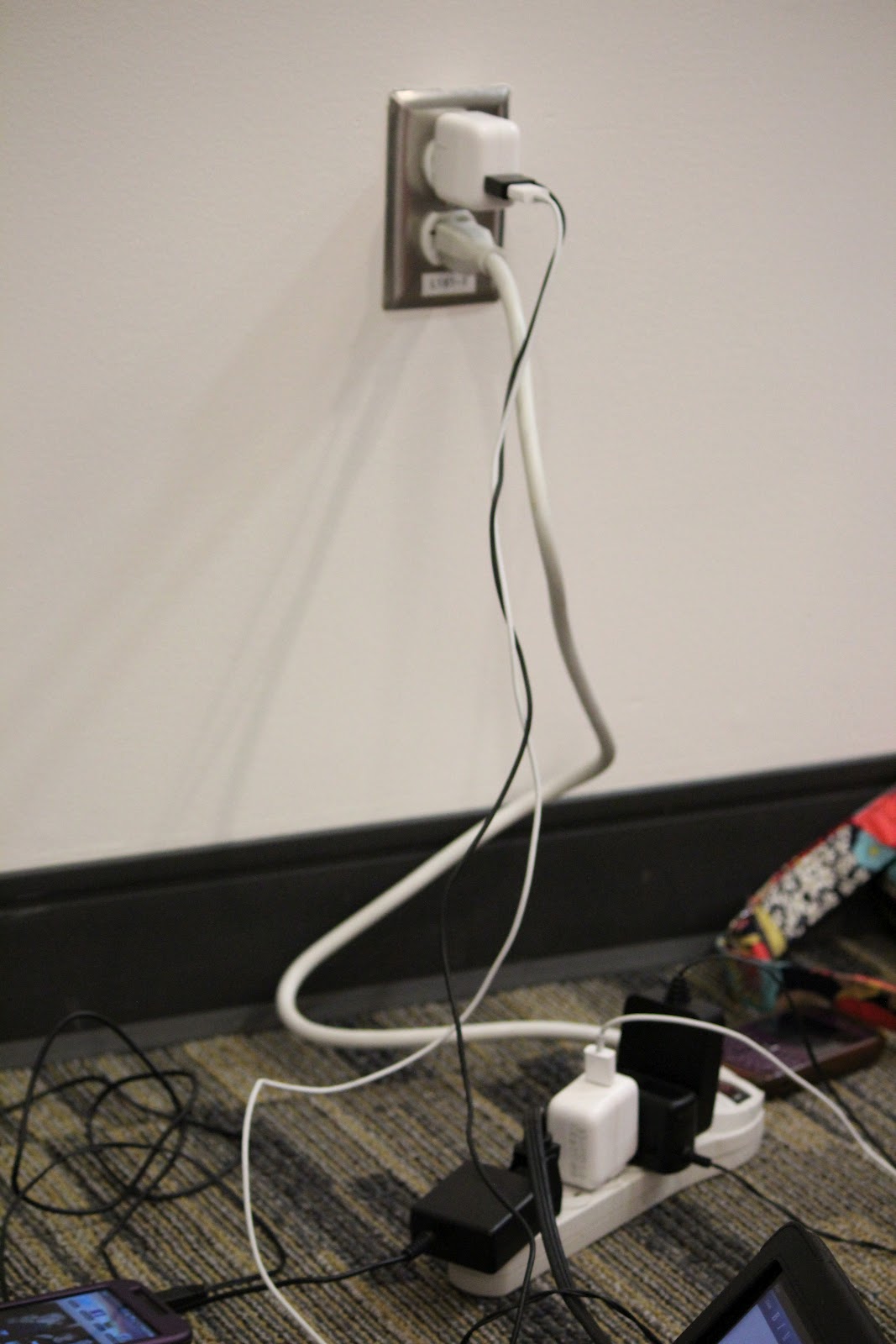
No more charger parties for my power strip.
We did finally have to leave all the excitement at the wildlife park so we could check into our hotel rooms. Then some more excitement occurred for my roommate, Grant Gardiner, and I, when the electricity in our room suddenly went out.


Between a combination of my converter and power strip not liking the new power outlets in Australia, we were without power for a half hour. I thought I might have ruined the wall sockets, but luckily the manager at the hotel just needed to flip a breaker and we were back in business.


Needless to say my power strip will likely not be involved in anymore "charger parties" at airports or other fun stops along the way, because I'm pretty sure it was toasted.


I got a little gelato for desert at La Camera.
To end the night the entire group went out to dinner at a nearby Italian restaurant called La Camera. Which I thought was quite coincidental because we had all been taking a lot of pictures at the Healsville Sanctuary and there are only more to come.


Well until next time, happy trails!


Thursday, May 3, 2012

Meet Meat Glue


Imagine another huge consumer scare happening to the beef industry that could equal if not surpass lean finely textured beef (LFTB) or "pink slime." 

Well "meat glue" is a relatively new issue in the media to American consumers, but Australians have been dealing with this problem for at least a full year as the following news story outlines:

The meat glue debate popped up in the news recently in Pittsburgh when this story was ran on the evening news.


Here is some transglutaminase in it's packaged form.
Since the story in Pittsburgh got out it has hit mainstream websites like Yahoo! and a similar story was reported in San Francisco which was picked up by the Huffington Post.

The proper name for "meat glue" is transglutaminase, which is a naturally occurring enzyme derived from animal blood. Transglutaminase is used to bind small cuts of meat to make a larger, more expensive cut of meat that resembles typical primal cuts.

While there are health concerns from commingling meat that has potentially been exposed to harmful bacteria, the risk is minimal if the meat is cooked to the appropriate temperature. 

Filet mignon is popular at restaurants, but for how much longer?
The larger concern for the meat industries in the United States and Australia is calling a cut of meat something it is not. Restaurants are making fraudulent claims by calling stew meats that could be cut from many parts of a carcass a filet mignon.

This practice does add value to smaller cuts of filet mignon, but is the monetary value gained worth the black eye it could cause for the meat and restaurant industries? 

You can bet this is not the last you will hear about this story and hopefully this does not become another public relations nightmare like LFTB.

Until next time, happy trails!