Showing posts with label Livestock Identification. Show all posts

Thursday, June 7, 2012

ID US...Please

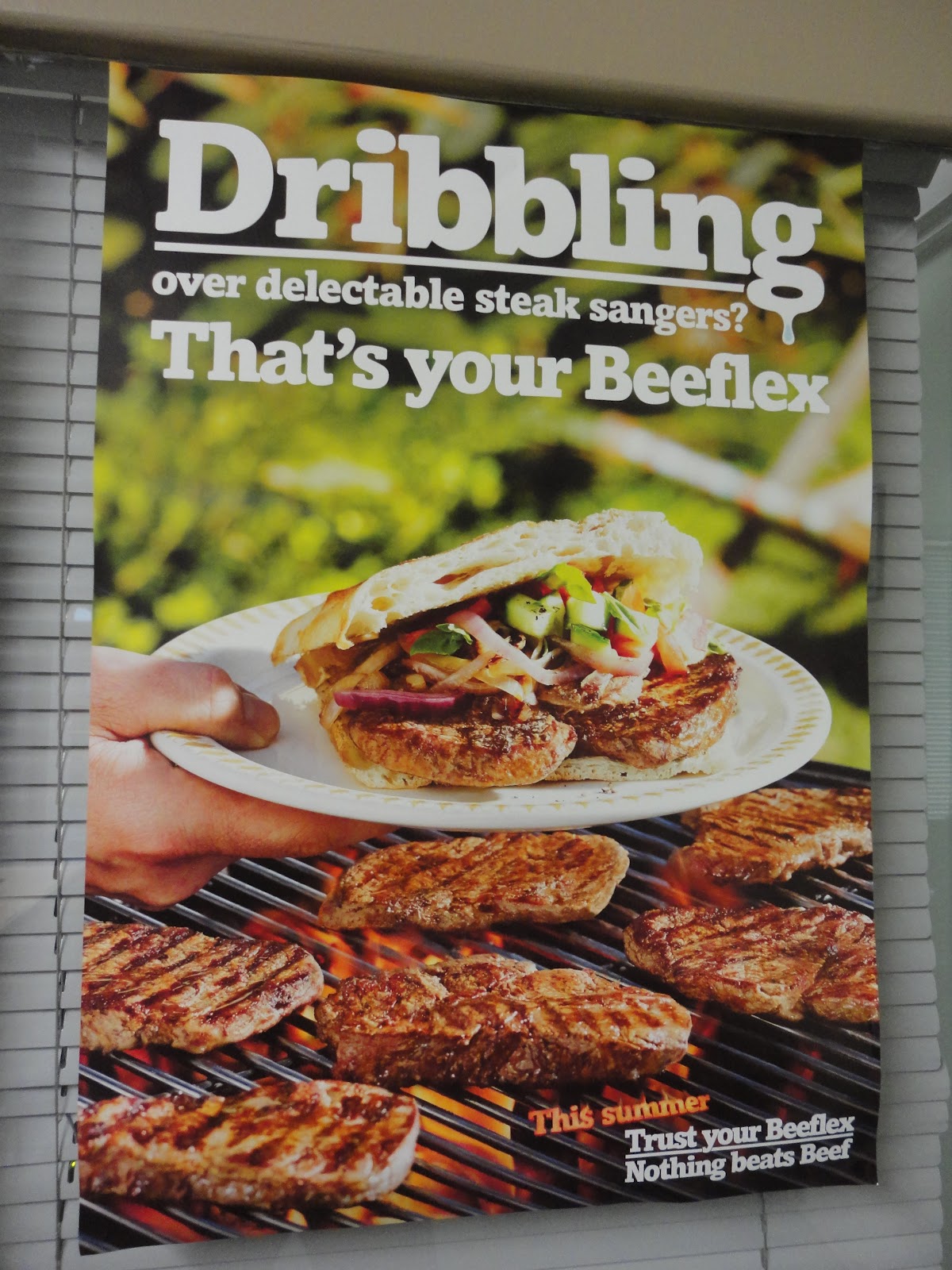
Here is some of the propaganda I took to learn about NLIS.
The National Livestock Identification System (NLIS) was one of the most interesting aspects of the trip for me. 

NLIS doesn't just help prevent the spread of disease, but it also helps increase the bottom line for producers. Having electronic identification tags like Australia uses in the beef industry enables breeders to obtain performance and carcass data much easier than in the United States. Because Australia is so dependent on exporting beef NLIS was a must and with the United States' beef industry moving more towards export it will only be a matter of time before a similar system will be adopted nationally. 

The owner of Lima Park showing an electronic ID tag.
In talking with producers it was obvious that NLIS was a major success in their marketing plans and herd improvement. For instance, at Lima Park they are now able to sell cattle to the European Union because the animals can easily be age and source verified. Also, monitoring when cattle are ran through the chute can be done thanks to the technology used to scan the electronic tags.

A digital tag reader at Lima Park.
After experiencing electronic identification in person I can now see the benefits it brings with it. In order for the United States to be on a level playing field with Australia and many other livestock producing nations, the USDA will have to continue the National Animal Identification System that was implemented in 2004.

Until we meet again, happy trails!


Friday, May 25, 2012

Rinse. Lather. Repeat: Australian Meat


Day three on the Australian adventure brought with it a spell of rainstorms and learning about meat packing.

Both sheep and cattle are processed here.
We checked out of the hotel in Melbourne and made our way to the Brooklyn Abattoir, which is owned by JBS. The facility kills and processes 5,000 head of sheep and 875 head of cattle daily. JBS is the largest meat processor in Australia and the Brooklyn Abattoir is a major packing facility in the southern hemisphere.

On our tour we were able to watch all facets of the slaughter and packing process for both species of ruminants. We moved from multiple buildings and rooms throughout the facility. At each entrance and exit we had to wash/disinfect our boots and hands. This was a very important step in preventing the spread of contaminants at the abattoir.

(Warning: some slaughter practices will be explained, so if you are leery of blood and guts skip down a few paragraphs.)

Some of the K-Staters after the tour.
Something that I found interesting was the "knock box" which is used for stunning cattle and bleeding them out. The knock box is a hydraulically operated machine that restrains cattle to be stunned. After being stunned the cattle are flipped 180 degrees, upside down and the throat is cut to help bleed them out. To me it seemed like an efficient and safe process to slaughter cattle, and it offers a humane death for the animals that go through the facility.  

Marketing materials for JBS beef.
The sheep kill floor was also pretty neat to see, as this is an industry that is not as prevalent in the United States. In all it takes between 15 to 20 minutes for each sheep to go from stunning to the chill room.

Both lamb and beef carcasses are chilled for 24 hours, typically at 0 degrees Celsius before they are cut into primals like steaks and chops. After being sliced and diced into various cuts of meat everything is vacuum packed, boxed and ready to ship. It generally takes 3 to 5 days for the finished product to reach supermarkets in Australia. However, the exported product typically takes 4.5 weeks to reach its destination, which takes up more than half of the 8 week shelf life.

Marketing value added products from the Brooklyn Abattoir is something that was new to the plant just two days before our visit. Some former beef chill and boning rooms were retrofitted to handle a value added processing line that was brought in from a Tasmanian JBS plant. The value added line automatically cuts various types of meats into more consumer friendly products. During the value added process there are various labels and ingredients included with the product to help catch the consumers attention and simplify cooking.
The largest packing company in Australia is JBS.

In all it was interesting to see the similarities between the US and Australian meat packing industries, but there were some differences because of cultural taste and international marketing. Now we can look forward to our next abattoir tour in Wagga Wagga with Cargill where they specialize strictly in beef processing.

Until we meet again, happy trails!

Melbourne Maze

If there was one television show to describe our second day in Melbourne it would be Lost.

This photo put me a little behind the group
On multiple occasions I was left behind either because I was being slow, taking too many pictures, asking too many questions or waiting on others in the group to catch up. Luckily I was able to catch back up with our mob of people every time, but I did get a bit nervous on a few occasions.

The first time I got separated from the group was during some photo opportunities while we were in route to the Department of Primary Industries (DPI).

At the first stop we met with the DPI of the State of Victoria where there were representatives from the livestock industry, including the National Livestock Identification System (NLIS). Tony Britt, Director of Animal Biosecurity and Welfare, was our many presenter and he gave an overview of NLIS.
Some of the swag I scored at DPI.

We learned from Tony that identification of all sheep and cattle is federally required to help detect and prevent the spread of disease outbreaks, such as foot and mouth.

Our first group picture.
Next the group rode around on a bus tour making stops at various gardens and architectural wonders of Melbourne. I managed not to get left behind during this part of the day.


To end our day of touring we ventured to the Carlton United Brewery, home of Australian beer mainstay Foster's. We learned about the brewing process and even got to do a little taste testing. However, before I could taste any grog I had to wait with five other K-Staters because we had been locked in the bottling side of the factory.

Some darn good grog.
After waiting five minutes we were rescued by a Canadian import who was nice enough to offer the whole tour group a round of beer. Then I spent a little bit of my Australian currency on a Foster's t-shirt and a cooler full of six different types of beers to taste test throughout the trip.

The final time I was lost in the labyrinth of Melbourne happened on the way to a casino buffet. My fellow wildcats had traveled all over the downtown area of Melbourne in search of a restaurant that could seat us. In the process we had lost our tour guide Graeme Mitchell and Michael Wimer. They were both engaged in a conversation about the American and Australian beef industries. I realized this so I hung back to help direct them to the Crown Casino, but little did I know that the casino would be a maze of confusion.
Blogging ain't easy, but somebody has got to do it.

A half-hour after journeying through the casino we finally were reunited with the group and I was able to dine on various types of cuisine to quince my hunger.

Well, our stay in Melbourne is over. Now it's time to see some wide open space between Melbourne and Sydney. Maybe we'll get a little gravel in our travel too.

Until next time, happy trails!